
Some of the best ideas in the translation and localization industry come from conversations with people who understand the business, share its challenges and are always happy to exchange experiences.
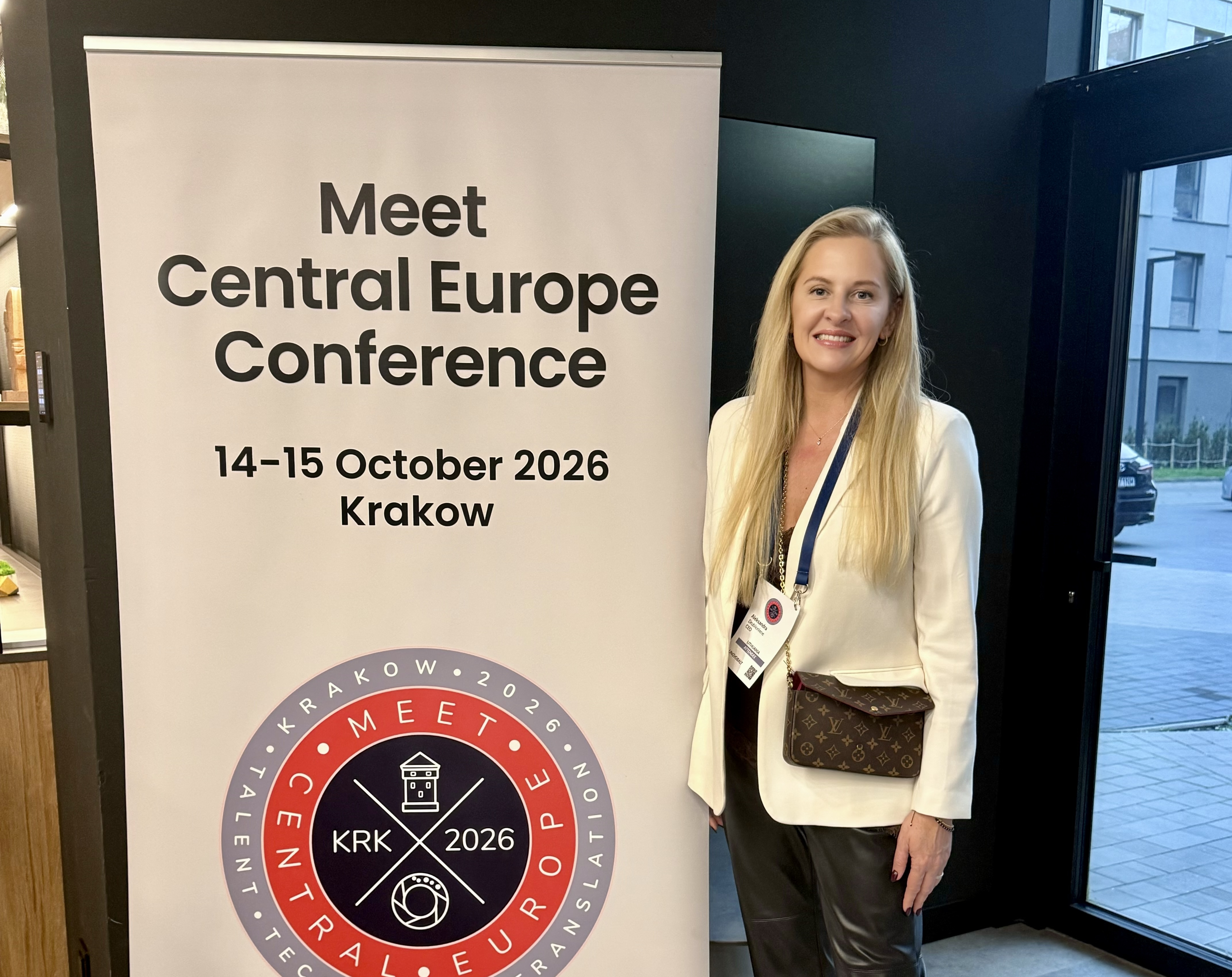
For LINGVOBALT CEO Aleksandra Drublionienė, attending Meet Central Europe 2026 in Kraków, Poland, was an opportunity to reconnect with long-standing industry colleagues and partners, catch up with old friends and return home with fresh perspectives on where the language services industry is heading.
Reconnecting, Sharing Ideas and Learning from Each Other
There is something special about meeting people you have worked with for years, especially when professional relationships have grown into genuine friendships.
Meet Central Europe had that familiar feeling of a big industry reunion. There were plenty of friendly conversations, long-awaited catch-ups, shared stories and opportunities to learn from one another.
And often, the most valuable exchanges happen outside the formal conference programme. A casual chat over coffee or an honest conversation with a fellow industry professional can offer just as much food for thought as a presentation.
For LINGVOBALT, these connections matter. Working in translation and localization means collaborating with people across countries, languages and cultures. Building trust, understanding different perspectives and maintaining strong relationships are an important part of making those collaborations work.
AI, Translation and Localization: What Is Changing?
Unsurprisingly, artificial intelligence was an important part of the wider industry conversation.
AI is already changing how translation services and localization services are delivered. AI-assisted translation, machine translation post-editing (MTPE) and AI-generated content review are becoming increasingly relevant as companies look for more efficient ways to manage multilingual content.
But faster content production also raises practical questions. How do we maintain linguistic accuracy? Who checks whether a translation is appropriate for its intended audience? And how do we ensure that efficiency does not come at the expense of quality?
These are familiar questions for language service providers.
Technology can support translators and localization teams, but it does not remove the need for professional judgement. Translation quality assurance, cultural understanding and careful human review remain particularly important when content is complex, sensitive or intended for specific markets.
The real challenge is finding the right balance between language technology and human expertise, rather than treating them as competing approaches.
Bringing Fresh Perspectives Back to LINGVOBALT
One of the most rewarding aspects of attending international industry events is returning with ideas worth discussing with the rest of the team.
For Aleksandra, Meet Central Europe offered opportunities to exchange practical experiences with fellow professionals, hear different perspectives and reflect on the changes affecting translation and localization workflows.
At LINGVOBALT, these conversations help inform how the company approaches its work, from professional translation services and localization projects to quality assurance and the responsible use of AI-supported tools.
There is always something to learn from colleagues who face similar challenges but may approach them differently.
The People Behind the Industry
Meet Central Europe was a welcome opportunity to spend time with people who make this industry such an interesting place to work.
AI will continue to influence how multilingual content is created, translated and reviewed. Yet behind every successful project are people making decisions, solving problems and building relationships based on trust.
LINGVOBALT returned from Kraków with fresh ideas, renewed connections and plenty to share with the team.
And perhaps that is what makes these gatherings so worthwhile: the conversations continue long after everyone has gone home.